“Steel isn’t made in a single strike but in returning to the hammer after every pause.”
Reflection:
Last week on MindForge Podcast we sat with the idea of struggle. Not as something random or unfair, not as a sign that things are breaking down but as a process. Pressure that doesn’t just happen to you but pressure that starts to reveal you. Steel doesn’t become steel in comfort it becomes steel in heat.
For a lot of people that idea lands quickly and it makes sense on paper. It even feels true in the moment. But there’s a gap most people don’t notice until later on. It's the gap between understanding struggle and actually enduring it well, because understanding it is easy when life is calm enough to reflect. Living it is different.
Eventually, everyone hits the same point. Not at the beginning of change but somewhere in the middle of it. When the motivation fades, when the urgency disappears, when the routine stops feeling new, when the “turning point” stops feeling like a moment and starts feeling like actual work. That’s where most people get tested. Not in the spark of the motivation but in the silence that follows after it fades away.
I’ve been thinking a lot about how many people are drawn to transformation but not necessarily committed to the process that makes transformation permanent.
There’s something compelling about the reset moment, the clean slate, the decision, the identity shift you can almost feel happening in real time. But a life doesn’t change because of a moment like that... it changes because of what survives after it. And that’s where things get uncomfortable for most people. Because once the emotion fades you’re left alone with your standards not your intentions and what you actually do when no part of you feels like doing it. That’s usually where discipline gets misunderstood.
I feel like so many people hear the word and assume force, pressure, self punishment. A kind of constant internal war just to stay on track. But what I have found is that real discipline doesn’t feel loud like that, it feels quiet. It’s the decision to continue when nothing is pushing you anymore. It’s getting up when there’s no external consequence for staying down. It’s doing the work when the outcome is unclear and the progress is invisible. It’s staying in motion while doubt sits nearby not arguing with you but just watching.
Over time, something becomes clear: Discipline isn’t just a tool for achievement. It’s what gives struggle meaning. Because struggle alone doesn’t transform anyone. Two people can go through the same pressure, the same setback, the same season that forces them to confront themselves. One comes out clearer sharper and more grounded. The other comes out heavier, slower and more convinced that nothing ever changes.
The difference usually isn’t the difficulty of what they faced. It’s whether they kept picking up their hammer.
That’s the image from Episode 1 that hasn’t left me. The forge doesn’t shape anything on its own. Heat only makes the material workable. And what shapes it is repetition. Intentional force applied again and again.
That’s what discipline actually is. Not intensity. Not perfection. But Repetition.
Showing up again after you drifted. Returning when you fell off. Continuing when it would be easier to disappear. Building a pattern that doesn’t depend on how you feel that day. Because the truth is a lot of people aren’t exhausted from the work itself. They’re exhausted from negotiating with themselves.
Arguing with the alarm, debating the workout, revisiting the decision to start over for the tenth time, waiting to feel ready enough to act like the person they say they want to become, and in that waiting, time keeps moving anyway. At some point you realize confidence doesn’t come first. It doesn’t arrive fully formed and then get tested. It’s built. And it’s built the same way everything else is built, through evidence.
Action creates evidence. Evidence creates identity. Not thought. Not consumption. Not preparation disguised as progress. But action. Even when it’s imperfect. I would say especially when it’s imperfect.
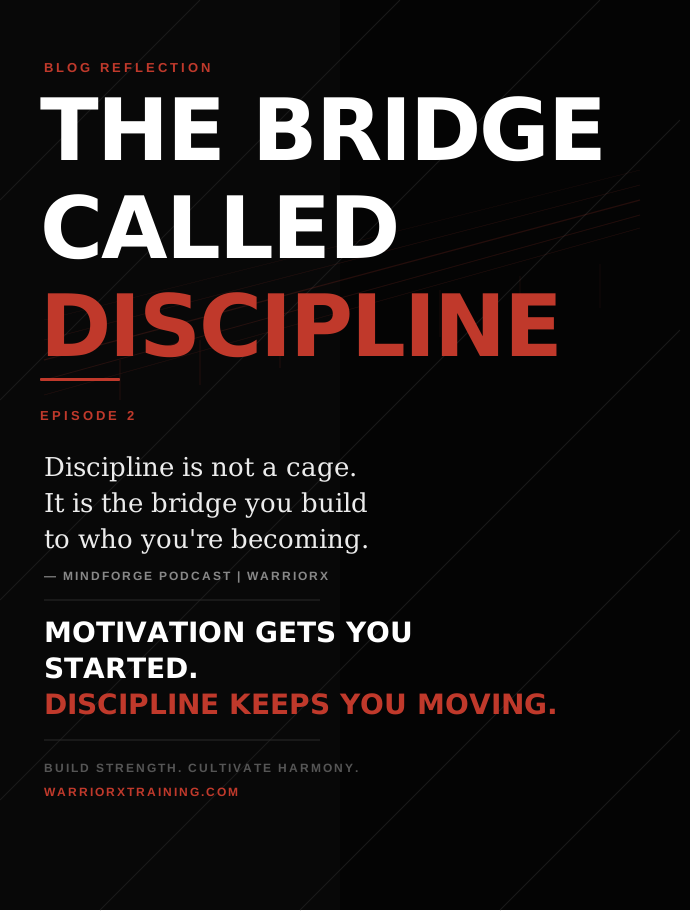
That’s the bridge we explore in Episode 2 of MindForge Podcast.
Because most people don’t need more motivation. They need something that holds when motivation disappears. Something that doesn’t collapse the moment life gets heavier than expected. This episode is about that bridge. Between who you are right now and who you keep sensing you could be.
Between struggle and transformation, between intention and identity. And that bridge has a name. It's Discipline.
Because eventually your life becomes the accumulation of what you repeatedly choose to do after motivation leaves the room. So the question isn’t whether you can start. The question is what you do when it stops feeling new.
Pick up the hammer and stay in the Forge.
3 Actionable Steps:
1. Define the “non negotiable minimum.”
Pick one or two habits that you do regardless of mood, energy or circumstances. Not your ideal routine but your baseline. Something small enough that you can complete it on your worst day. The point is identity consistency not intensity.
2. Remove the negotiation window.
Most people lose discipline in the gap between thought and action. Shrink that gap. Decide in advance when and where you do the thing, then execute without revisiting the decision. No re-evaluating in the moment just initiation.
3. Track returns not perfection.
Don’t measure success by streaks or flawless execution. Measure how quickly you return after breaking rhythm. The real signal of discipline isn’t never falling off it’s how fast you pick the hammer back up and continue.
Step into the forge. Listen, reflect and apply.
MindForge Podcast Episode 2 : https://open.spotify.com/episode/1Tqwm2cTVifcXnW6vFrbuK?si=F-e_vh4KRFqrmn3tD_M92w
Follow MindForge Blog for weekly reflections, lessons and mindset shifts. Share this with someone who needs it and drop your email below if you want the next one sent every Sunday.